|
©The Archaeological Settlements of Turkey - TAY Project
|
|
|
|
|
 |
Gönen'deki Kilise |
|
|
|
|
For site maps and drawings please click on the picture...  |
For photographs please click on the photo... 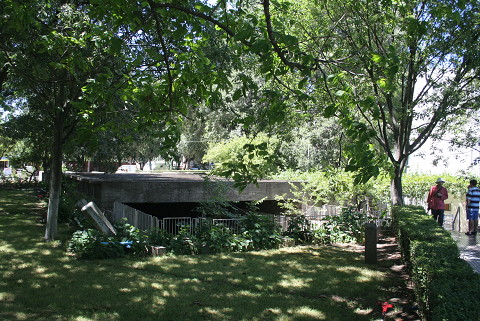 |
|
|
|
|
Type:
|
Church |
|
Plan Type:
|
|
|
Year of Costruction:
|
|
|
Phase:
|
|
|
Investigation Method:
|
Restoration |
|
Altitude:
|
40 |
|
|
|
|
Region:
|
Marmara |
|
Province:
|
Balikesir |
|
District:
|
Gönen |
|
Village:
|
Kurtulus Mah. |
|
Antique Name:
|
|
|
|
|
  |
|
| The ancient name of the church location is known as Artamea and Poemaenim. It was an important thermal therapy center during Bithynia Kingdom, Roman and Byzantine periods. Historian Strabon and Rhetorician Aristeides mentioned Gönen thermal waters. The building is inside the public park at Gönen District center. It was dated to 5th century on the placate at the entrance. It has a rectangular plan. The apse and mid nave are visible. The floor of the central room is covered with mosaics/opus sectile that were elaborately made. The ceiling was covered with concrete in order to preserve the mosaics. The concrete abutments and iron bars are observed on the walls that support the concrete construction. Electrical cabling was installed inside the building for lighting purposes. This work which was intended to preserve the building caused destructions. The mosaics on the floor contain geometric motifs, motifs that contain joints and knots, kantauros motif and figures of flowers with four petals. Small tesserae were used. These motifs on the floor started to wear and disintegrate. These were revealed by accident during the construction of the Günes Hotel on the northeast side of the building. The sign at the entrance reads: Ministry of Culture Gönen Mosaics Museum [TAYEx 07.07.2008]. |
| Location: |
| Geography and Environment: |
| Research and Excavation: |
| Description: |
| Finds: |
| Interpretation: |
| Destruction: The church remains that were found during the hotel construction are observed at foundation level. the top was covered with a concrete roof. The mosaics floor is generally in good condition but started to disintegrate at intervals [TAYEx 07.07.2008]. |

