|
©The Archaeological Settlements of Turkey - TAY Project
|
|
|
|
|
 |
Çanli Kilise |
|
|
|
|
For site maps and drawings please click on the picture... 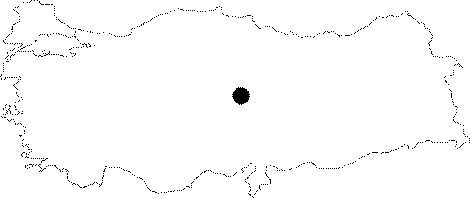 |
For photographs please click on the photo...  |
|
|
|
|
Type:
|
Church |
|
Plan Type:
|
Cross Plan |
|
Year of Costruction:
|
4th c. |
|
Phase:
|
Early |
|
Investigation Method:
|
Survey |
|
Altitude:
|
|
|
|
|
|
Region:
|
Central Anatolia |
|
Province:
|
Kayseri |
|
District:
|
Develi |
|
Village:
|
Soysalli |
|
Antique Name:
|
Korama / Gedeme |
|
|
|
  |
|
| Location: It is located on the northeast of the settlement in Germe Plateau on the southern slope of Mount Erciyes; in Soysalli Village in Develi District of Kayseri Province. |
| Geography and Environment: This settlement is located on 42 km southwest of Kayseri, on the south of Mount Erciyes. It is also possible to say that this settlement is situated on the steep valley between Mount Erciyes and Lifos Hill, 12 km north of Develi District. This Roman and Byzantine settlement is 2000-2500 m above the ground and surrounded by the hills named Kilise Tepe, Yamaç Tepe, Gök Tepe and Kartin Tepe. |
| Research and Excavation: |
| Description: Architectural Features: Çanli Church has vanished. No remains were found. It was introduced by Hamilton, Rott and Restle. It is probably situated in the area where the baths is located [Hamilton 1842:281; Rott 1908:163-166; Restle 1981:53-55]. The structure is in "T" type of cross plan [Restle 1979, draw. 32]. It measures 21x14.5 m on the outside. The north-south cross-arms are in the same length, while the western cross-arm is longer. The cross-arms open to the rectangular room in the east-west direction at the center. The arches connecting the northern and southern cross-arms to the central room sit on the wall pillars. The apse on the east of the structure is in the form of horseshoe on the inside and with five façades on the outside. It opens to the central room through the arch. On the photo taken by Rott, the horseshoe-like round arches which connects the northern-southern cross-arms of the church and the apse to the the central room can be seen [Rott 1908, fig. 5]. The arches sit on the profiled consoles of the wall pillars and the roof of the central room has completely vanished. Based on the restitution drawing, the northern-southern cross-arms are covered by double splayed roof and the central section is roofed by pyramidal roof with a cubical drum on the outside. The local volcanic stones were used in the structure. Rott mentioned that the internal surfaces of the walls were plastered. Decorative Features: There is a stepped fillet extending along the window arches on the top of the façades. In Çanli Church, there are acanthus leaves on the consoles in which the arches supporting the roof of the central room and these leaves are applied in same technique and style such in Panagia Church that is located in the same region. The center of the door lintel under the façade of the western cross-arm is decorated with cross relief in medallion and multifoil flower motifs in circles on both sides of it. |
| Finds: |
| Interpretation: |
| Destruction: |

