|
©The Archaeological Settlements of Turkey - TAY Project
|
|
|
|
|
 |
Ioannes Prodromos Hebdomon Kilisesi |
|
|
|
|
For site maps and drawings please click on the picture... 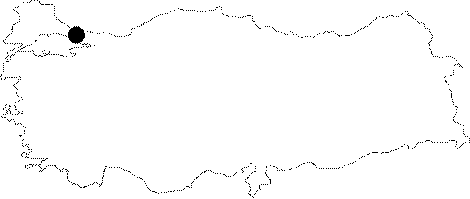 |
For photographs please click on the photo... 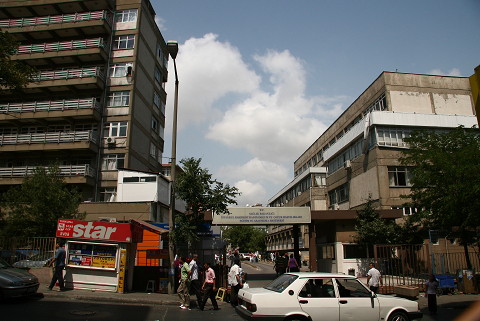 |
|
|
|
|
Type:
|
Church / Martyrion |
|
Plan Type:
|
Central Plan |
|
Year of Costruction:
|
6th c. |
|
Phase:
|
Early |
|
Investigation Method:
|
Survey Excavation |
|
Altitude:
|
23 |
|
|
|
|
Region:
|
Marmara |
|
Province:
|
Istanbul |
|
District:
|
Bakirköy |
|
Village:
|
Yenimahalle |
|
Antique Name:
|
Hebdomon |
|
|
|
  |
|
| Location: It is situated to the southwest of the military court, west of the Çirpici Stream in the Yenimahalle Quarter of the Bakirköy District of Istanbul. Now, the Maternity and Child Hospital of SSK is located on the very spot of the church. No traces of the building are available. |
| Geography and Environment: Hebdomon was the garrison of imperial army in Thrace. The court used to frequently visit Hebdomon for military celebrations, ecclessiastical ceremonies or resort in summer as well as welcoming the Emperor returning from a victory. In addition to the church of St. John Theologos, other buildings in the area included another church dedicated to St. John Prodromos, the cistern of Fildami, which supplied the requirements of the imperial army and the palace, and 3 small cisterns to the west, a closed cistern used as a powder magazine during the Ottoman Period on the seashore, and the palaces of Magnaura and Jucundiane, Garrison of Theodosians, necropolis, and a few churches dedicated to some martyrs. |
| Research and Excavation: An excavation was conducted in the region between 1922 and 1923 under the direction of Th. Macridy upon request of the French troops, who camped near Bakirköy during the invasion of Istanbul in the World War 1 [Macridy 1938-39:86Ğ187]. It was completely demolished in 1959, and vanished since then. |
| Description: Building Phases: It is assumed that it was built in basilical plan for hiding the head of the saint, that was brought to Istanbul in 391, later than the Church of St. John Theologos, during the reign of Theodosius I. The building was completely rebuilt again with a central plan during the Justinian period (527Ğ565). Becoming ruins during the reign of Basil I (867 Ğ 886), it underwent a comprehensive repairwork in 872 together with the Church of St. John Theologos. Architectural Features: It has a central plan. Based on the excavations, it was revealed that it had an octagonal plan at the center with an apse on one side. It was found out that the octagon was enlarged on all sides by a niche, an exedra or a square cell, except the side with the apse [Mathews 1976:140, pics. 14.1-14.5]. Decorative Features: A square panel with a side length of 3.5 m was found during the excavations. The mosaic contains a circular medallion in the center, enclosed with further eight smaller circles in equal dimensions, where the centers are on the same circle. The nine medallions were tied to each other by a massive band of stone. But the band does not have a complete knitting figure by passing above and below. It was only made up of circles next to each other and bound together. The pavement did not survive to the present day, and no sufficient data is provided in the publications. Therefore, the data on the technique and the material are limited. The dominant color of the pavement is white. The massive marble bands were probably white, and the circular plates were of green breccia (breche) [Demangel 1945:22-25, pl. 5-6; Demiriz 2002:68-72]. |
| Finds: Architectural Plastics: Capitals, columns, and fragments of friezes made of Prokonnesos marble were uncovered during the excavations, and they have been currently exhibited at the Archaeological Museums of Istanbul (Corinthian capital, env. no. 3908; Ionic impost, env. no. 3969; capital with cross, env. no. 3971, Ionic impost, env. no. 3970; marble plate, env. no. 3967; column, env. no. 3968; fragment of parapet plate) [Demangel 1945:25-29, pics. 10-17]. |
| Interpretation: The apse remains, which are 1.5 m high with a semicircular plan uncovered among the houses in Yenimahalle, were considered as the apse of the Church of St. John Theologos by H. Glück, while the same ruins were identified as the Martyrium of St. Theodota by J.B. Thibaut before the excavations [Thibaut 1922:39]. Following the excavations, Macridy showed the building on the restitution plan as an octagon with an apse on one side. In the plan of R. Demangel, only the sections which were uncovered after the excavations were shown, and no attempt was made to complete the missing parts. The pavement uncovered during the excavation is on the left side of the apse, and if the building is a complete octagon it stays outside the martyrium. If it is accepted that there was a projected cell here, then the edges of the panel are not in compliance with the building. According to Macridy, while the repairworks performed during the reign of Basil I, it was combined with the church of St. John Theologos, which probably stood next to it. If it was the case, then the mosaic pavement probably decorated a section of the Church of St. John Theologos, which was in basilical plan. Demangel agrees that the pavement belongs to the central building [Demangel 1945:17-21]. On the other hand, Y. Demiriz states that this type of floor mosaics were first used in the second half of the 9th century [Demiriz 2002:71]. |
| Destruction: The remains are invisible due to the hospital constructed right above these remains. |

