|
©The Archaeological Settlements of Turkey - TAY Project
|
|
|
|
|
 |
Perinthos Bazilikasi |
|
|
|
|
For site maps and drawings please click on the picture... 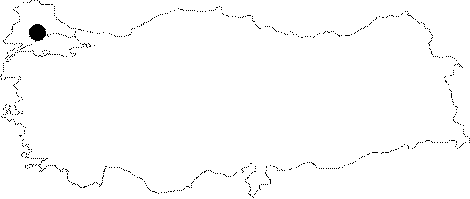 |
For photographs please click on the photo... 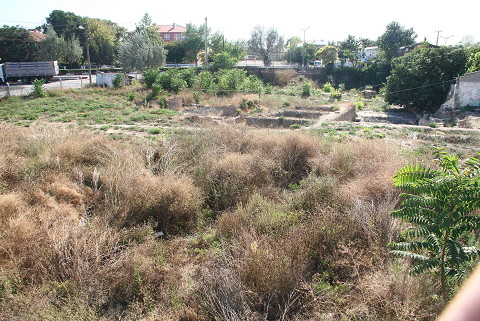 |
|
|
|
|
Type:
|
Church |
|
Plan Type:
|
|
|
Year of Costruction:
|
5th and 12th c. |
|
Phase:
|
Middle Early |
|
Investigation Method:
|
Survey Excavation |
|
Altitude:
|
5 |
|
|
|
|
Region:
|
Marmara |
|
Province:
|
Tekirdag |
|
District:
|
Marmara Ereglisi |
|
Village:
|
|
|
Antique Name:
|
Perinthos - Herakleia |
|
|
|
  |
|
| Location: It lies at Sellektör Street nr 1/A in Ceditali Quarter, to the immediate north of the Perinthos Monumental Building located on the plot no. 2462 and section no. 59 at the Köyiçi location in the Marmara Ereglisi District of Tekirdag. |
| Geography and Environment: It is situated on the eastern side of the fortress gate in Down Town. |
| Research and Excavation: It was found when a salvage excavation was conducted upon some architectural finds uncovered during groundbreaking activities of a building in 1992. The excavations were carried out under the supervision of M. Akif Isin, the Director of the Museum of Tekirdag in the western section of the basilica in 1992-93. Stone and concrete buildings are demolished for opening up space for the excavation in 2005; 7 trenches are opened in 2006 for finding the apses in the East of basilica and finding the outer counters of the building. The excavation continued for 2.5 months during 2007. |
| Description: Building Phases: The basilica was built in the 5th century, but it has multiple phases of construction. A small church was built on the southern arcade of the atrium of the basilica, and on the south section of the narthex in the 11th or 12th century, and the surrounding area was used as a cemetery. A wall of a later phase in the east-west direction could not have been traced and identified [Isin 1994:62-63; Isin 1995:28]. Architectural Features: Similar to the basilica forms of the Early Byzantine Period, it is in the east-west direction with three naves and a courtyard. The main material green sandstone was combined with bonds of five courses of bricks. The excavated 23.8 m wide section is 40 m long. The principal structural system of the building is uncertain. The access from the narthex to the naos is provided by 5 double-door leaves, with thresholds in marble. Pivot holes and traces of door openings are visible [Isin 1994]. The excavations of 1993 yielded a well made of henna limestones, bricks, and powdered bricks in the naos, dating to the same phase of the naos floor. The long trench which was dug to the north in order to reveal any possible relationship between the church and the walls yielded a corridor with a floor at a deeper level. Paved with bricks, the northern wall of the corridor was also erected in the same technique with the basilica. However, the trench should have been opened larger to obtain more information [Isin 1994:62-63; Isin 1995:28]. The small church dating from the 12th century was built on the nave with a mosaic floor on the southwestern section of the large basilical church. The floor was constructed with the marbles which were removed from the larger church. The apse of the small church is located to the immediate east of the threshold stone, which provides access from the narthex to the southern nave. The columns in the small church are all reused [Isin 1994:64]. Based on the analysis of the marble plates found in situ during 2007 excavations helped understand the internal faces of side walls -currently 51.4 m long and 23.80 m wide- which were constructed of greenish sandstone with tiles placed in between as stretchers were covered with marble. The yard and the space were covered with marble but after the collapse of the church these marbles were used to cover the chapel constructed in the West corner of basilica [Öztürk 2009: 30]. Decorative Features: The courtyard and the main bay are covered with marble blocks, bearing the monogram "qK". The floor mosaics are mainly in black and white, and red, yellow, and green. The central motifs of the mosaics flanking the naos bear peacock figures. The southern façade is decorated with a peacock figure, and two peacocks are portrayed sitting on a crater in the northern one. The figures are within circles, and then framed by square panels. The frames of the mosaics mainly include wave patterns, ivy leaves, hair ornaments, and meander motifs. Inside the panels are Hercules knots, and geometric patterns within various geometric shapes, and animal and plant motifs. The plant motifs are composed of flowers in pots, fruits in baskets, branches of fruit trees, pomegranate branches, and single pomegranate patterns. The animal motifs are composed of ducks, birds eating bugs, ducks in vessels, goose, partridges besides cages, birds hunting fishes, and storks hunting snakes. The mosaics are, in general, in well preserved condition [Isin 1994:63]. The small church has an opus sectile mosaic floor [Isin 1994:63]. The dominant colours used in tesserae in the South Nave are red, green, white and yellow; these tesserae are similar to those found in 1992-93 excavations. Baskets, craters, pine trees, bulls, antelopes and rabbits are decorated on the middle panels. The main decorations are divided by braid motive into square panels in which different figures are placed including animals like birds, ducks, gooses, partridges, dolphins, fishing birds, worm eating birds, plants like pomegranate tree, wine branch, and fruits like pear, apple and quince. The black flat bands which are paved as borders are ended with leave motives. Some of the motives are encountered for the first time on this mosaic -that is excavated in 2007- including pine tree, dolphin, bull, antelope and rabbit -eating grapes-. A severe fire layer is encountered in the basis of the two trenches which are merged together. Pieces of fresques, glass mosaics and relief samples Ğwall borderĞ captured among the thick layer of ash show the magnificence of the period. Considering that the pieces of fresque captured have one side grilled Ğfor enabling better attachmentĞ it is understood that they have dropped from the ceiling during the fire. The fresques are believed to be ceiling decorations of saints with auras painted side by side inside the round panels [Öztürk 2009: 30-31]. |
| Finds: Coins: Concave Byzantine coins dating to the 11th and 12th centuries were uncovered. Graves: The burials of the period were found on the marble floor of the naos and on the mosaics in the eastern section of the small church [Isin 1994:64]. Simple graves along with sarcophagus graves are located in the upper layers of the trenches opened in 2007 as is the case with the earlier trenches. This area is used as a cemetery after the collapse of the basilica in which around 200 graves are located this year. Among the findings are cross-shaped relic holders, pieces of necklaces, a ring, a bracelet, an earring and a coin [Öztürk 2009: 30]. |
| Interpretation: After an analysis of the captured findings and the Byzantium coins it is understood that the Basilica is constructed in the early 6th Century, and after the destruction of the 1.300 square meters basilica, it is mostly used as a cemetery with a relatively small area used as a chapel. This early Byzantium structure has three naves and it is similar to the Patrick Studios Church (Imrahor Mosque) which is in Imrahor Suburb of Istanbul City and started construction in 453/454 AC with features like its plan, size, opus sectile pavement, five doors opening to two naoses. During the Latin occupation (13th Century AC) the Studios Basilica is deserted but it is strongly believed that Perinthos Basilica is destructed during Early 7th Century due to severe Avar attacks [Öztürk 2009: 31]. |
| Destruction: |

